The Rise of Small Independent Breweries
Something significant shifted in American drinking culture around 2010. Consumers started asking where their beer came from, who made it, and whether the people behind it actually cared about the product. That curiosity fueled one of the more remarkable business trends of the past two decades: the rapid expansion of small, independent breweries rooted in specific places and communities.
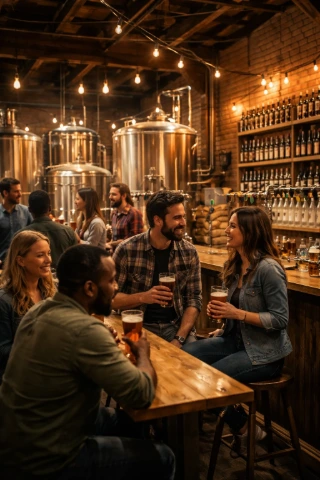
The numbers tell a clear story. According to the Brewers Association, the United States had roughly 1,800 craft breweries in 2010. By 2023, that figure had climbed past 9,700 — a fivefold increase driven almost entirely by small independent operations, not acquisitions by large national producers. These aren't subsidiaries of multinational beverage conglomerates. They're typically owned by local entrepreneurs who live in the neighborhoods their taprooms serve.
What Sets a Local Brewery Apart
Scale is the obvious difference, but ownership is what actually matters. A regional brand owned by Anheuser-Busch InBev sends its profits to shareholders in Leuven, Belgium. A neighborhood brewery sends those same dollars back into the local economy — through payroll, vendor contracts, and the owner reinvesting in their own block. When a place like Breckenridge Brewery was acquired by AB InBev in 2015, the community conversation that followed wasn't really about beer quality. It was about who controls the money and who benefits.
Small independent breweries also respond to local tastes in ways that corporate producers simply can't. A taproom in coastal Maine might source sea salt from a nearby harvester and collaborate with a local bakery on a spent-grain bread program. Those decisions reflect a genuine connection to place, not a marketing brief from a national brand team.
Consumer preferences have genuinely shifted toward that kind of authenticity. A 2022 Nielsen IQ report found that 74% of craft beer drinkers actively seek out locally produced options. There's no denying that breweries have benefited from this, but they've also helped create it — building communities of drinkers who care about origin as much as flavor.
How Local Breweries Strengthen Local Economies
Spend ten dollars at a national chain and most of it leaves town by nightfall. Spend the same at a local brewery and a meaningful portion stays in the neighborhood, cycling through wages, suppliers, and neighboring businesses. That circulation is what makes small breweries economically significant well beyond their size.
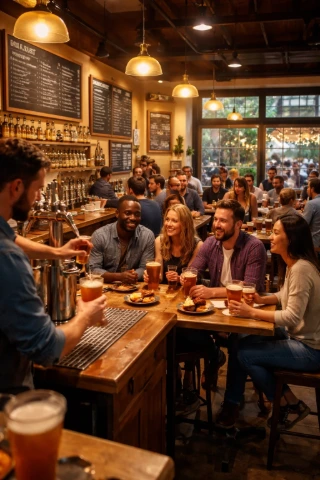
Jobs That Spread Across the Block
A single taproom typically employs bartenders, kitchen staff, event coordinators, and delivery drivers, but the job creation doesn't stop at the front door. Marketing agencies, graphic designers, and social media managers often work with local breweries on contract. When Burial Beer Co. in Asheville, North Carolina expanded its taproom in 2019, it added not just brewing staff but a full events team and partnerships with three local food vendors. That kind of ripple is common at this scale.
Supply Chains Rooted Close to Home
Grain, hops, cans, and kegs all need sourcing, and independent breweries often prioritize regional suppliers when they can. Some Colorado craft breweries source barley directly from San Luis Valley farms, keeping agricultural dollars in-state. Beyond ingredients, there are contractors for refrigeration repairs, printers for tap handle labels, and accountants who specialize in small hospitality businesses. Each of those relationships represents local income that wouldn't exist if the beer came from a regional distributor instead.
Foot Traffic and the Neighborhood Multiplier
There's no denying that a busy taproom changes the street around it. Restaurants, coffee shops, and boutiques near popular breweries routinely report increased weekday traffic, particularly during evening hours when taprooms draw crowds that then spill out to nearby spots. A 2022 report from the Brewers Association found that brewery visitors spent an average of 46 percent of their outing budget at neighboring businesses. For a struggling commercial strip, one well-run brewery can shift the entire economic mood of the block.
Taprooms as Gathering Places That Build Social Capital
Breweries don't exist in isolation from the communities that support them. The economic activity they generate – local jobs, supplier relationships, tax revenue – runs alongside something harder to measure but equally real: the social fabric they help weave simply by being a place people return to, week after week.

What Social Capital Actually Means
Sociologists use the term "social capital" to describe the trust, connection, and goodwill that accumulate when people interact regularly over time. Think of it as the invisible infrastructure of a healthy community – the reason neighbors look out for each other, volunteer at local events, or feel invested in where they live. Taprooms, almost by accident, are exceptionally good at building it. A shared pint table and a trivia night do more for neighborhood cohesion than most planned civic initiatives.
Events That Bring People Together
Regular programming is where taprooms earn their status as community anchors. Weekly trivia nights, live acoustic sets on Fridays, seasonal release parties – these aren't just marketing tactics. They create predictable rhythms that give regulars something to look forward to and newcomers a low-stakes reason to show up. Charity drives tied to local causes are common too. Asheville's Wicked Weed Brewing, for instance, has partnered with regional nonprofits on fundraising tap takeovers that pull in crowds well beyond their usual customer base.
The Modern Town Square
There's no denying that the traditional "third place" – somewhere between home and work where community life happens – has become harder to find. Taprooms fill that gap in a way that chain restaurants and coffee shops rarely do. Local running clubs, book groups, and neighborhood associations increasingly hold their meetings at brewery taprooms because the atmosphere is relaxed, the space is accessible, and the staff actually know people's names. Families show up on Sunday afternoons. Retirees claim corner tables on weekday mornings. That kind of layered, multigenerational use is exactly what social capital looks like in practice.
A Hometown Brewery Helps Define Neighborhood Identity
Place shapes a brewery, and a brewery can reshape a place. When a taproom opens in a converted grain elevator, a shuttered textile mill, or a century-old fire station, it does something that a chain restaurant rarely can: it makes the building legible again. Residents remember what it was. Visitors learn what the neighborhood used to be. That layering of past and present is where local identity gets made.
Names, Stories, and the Art of Being Specific
Brewery names are rarely accidental. Burial Beer Co. in Asheville, North Carolina, draws on Appalachian folklore and mountain imagery. Allagash Brewing in Portland, Maine, takes its name from a remote river in the state's north woods. These choices signal something: this beer belongs here, and so do we. When a brewery names a seasonal release after a local flood, a beloved park, or a neighborhood that once had a different name, it's participating in the ongoing story of that place.
Buildings That Carry Memory
Adaptive reuse has become one of the more visible ways breweries anchor themselves in community history. Rhinegeist Brewery in Cincinnati occupies a 100,000-square-foot bottling plant from 1895, in a neighborhood that was once the heart of German immigrant brewing culture. Restoring that building didn't just add square footage. It gave the Over-the-Rhine neighborhood a physical argument for its own significance.
Shared Reference Points and Civic Pride
There's no denying that a well-regarded local brewery becomes a shorthand for a neighborhood's character. When someone says "meet me at the taproom," they're also saying something about where they live and what they value. Breweries that partner with local farms for ingredients, donate a portion of sales to neighborhood causes, or host community forums earn a different kind of loyalty. They become institutions. Not in the stuffy sense, but in the way that a good diner or an independent bookstore becomes part of how a place understands itself.
Local Breweries Create Partnerships That Keep Money Moving Nearby
The value of a neighborhood brewery becomes especially visible when you look at the businesses around it. Independent breweries rarely operate with completely self-contained supply chains. They need food, ingredients, equipment, maintenance, printing, entertainment, transport, and professional services. Whenever owners choose nearby suppliers, a single brewery effectively becomes a customer for dozens of other small businesses.
These relationships can also make local economies more resilient. Instead of concentrating spending with one national supplier, breweries can distribute it among farmers, restaurants, artists, tradespeople, and service providers in the surrounding area. The result is a network in which one successful business creates opportunities for several others rather than keeping most of its economic activity behind its own doors.
- Local food partnerships: Taprooms without full kitchens frequently work with neighborhood food trucks, bakeries, pizza shops, and independent restaurants. A regular food-truck schedule can introduce hundreds of brewery customers to small food businesses they might otherwise never encounter.
- Regional agriculture: Brewers may purchase fruit, honey, herbs, coffee, grain, or other specialty ingredients from nearby farms and producers. Seasonal beers can create additional demand for crops while giving brewers ingredients that connect a particular release to its region.
- Artists and designers: Beer labels, murals, merchandise, photography, and event posters provide regular opportunities for local illustrators, photographers, printers, and graphic designers. A brewery's visual identity can therefore become another channel through which creative workers earn local income.
- Events and entertainment: Musicians, trivia hosts, market vendors, comedians, and community organizations often use taprooms as venues. These events provide paid work or fundraising opportunities while encouraging customers to stay longer and explore other businesses nearby.
- Skilled local services: Brewing equipment requires electricians, plumbers, refrigeration specialists, builders, accountants, and logistics providers. Independent operators often build long-term relationships with these businesses because reliable nearby support is valuable when something needs repairing quickly.
None of these partnerships is enormous by itself. Their importance comes from how frequently they overlap. A brewery may buy produce from one farm, hire a local band on Friday, host a food truck on Saturday, and order new printed menus from a nearby shop the following week. Customers attracted by those activities may then visit other stores on the same street.
That interconnected spending helps explain why the economic importance of a brewery cannot be measured only by how many people work behind its bar or brewing tanks. Its wider value lies in the network of transactions it creates. When those relationships remain local, more of the money generated by each busy weekend has a chance to circulate through the same community again.
Strong Neighborhoods Often Start With Local Places
There's no denying that the places where communities genuinely gather shape the character of a neighborhood more than any urban planning document ever could. An independent brewery combines entrepreneurship, employment, a real gathering space, and cultural identity into one visible, walkable institution. When someone chooses to spend an evening at a neighborhood taproom rather than a chain restaurant, they're doing something more than buying a pint. They're supporting a local owner who sources hops from a regional farm, pays wages to bartenders and brewers who live nearby, and hosts trivia nights that bring strangers into conversation. That web of relationships is what social researchers call social capital, and independent breweries generate it almost as a byproduct of doing business. Supporting one means supporting a wider local ecosystem of workers, suppliers, community events, and the quiet, accumulating thing we call civic pride.