The Four Core Ingredients Set the Stage
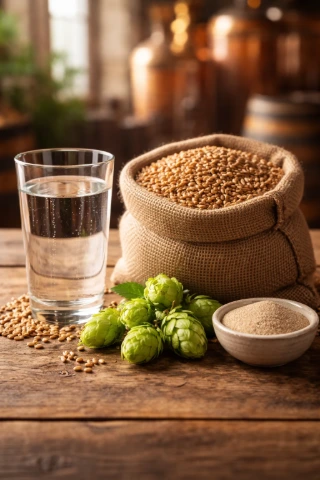
Every beer ever brewed comes down to four things: water, malted grain, hops, and yeast. That's it. The complexity you taste in a smoky porter or a hazy IPA doesn't come from a long list of exotic additives – it comes from how brewers choose and combine these four ingredients before a single drop of water hits a kettle.
Water
Water makes up around 90 to 95 percent of finished beer, so its chemistry matters more than most drinkers realize. Mineral content shapes mouthfeel and can sharpen or soften bitterness. The soft water of Pilsen, Czech Republic, produces the clean, delicate lager the city is famous for. The hard, sulfate-rich water of Burton-on-Trent in England amplifies hop bitterness in pale ales. Brewers today adjust their water chemistry deliberately to suit whatever style they're making.
Malted Grain
Grain is where fermentable sugar comes from. Barley is the most common base grain, but wheat, oats, rye, and corn all appear in different styles. Before grain can be used in brewing, it goes through malting – a process where the grain is soaked, allowed to germinate, then dried in a kiln. That kilning step is where color and flavor develop. Lightly kilned malt stays pale and biscuity. Roasted malt turns dark and brings chocolate or coffee notes. A brewer choosing their grain bill is essentially choosing the flavor foundation of the beer.
Hops
The cone-shaped flowers of the hop plant add bitterness to balance malt sweetness, but they also contribute aroma – citrus, pine, tropical fruit, or earthy herbs depending on the variety. Cascade hops, common in American pale ales, lean grapefruity. Saaz hops, used in Czech lagers, are floral and spicy. When hops are added during brewing affects what they deliver.
Yeast
Yeast converts sugar into alcohol and carbon dioxide, but it does far more than that. Different yeast strains produce different flavors during fermentation. Ale yeasts work warm and can add fruity or spicy esters. Lager yeasts ferment cold and tend toward a cleaner, more neutral profile. Choosing a yeast strain is as much a creative decision as choosing a hop variety.
Malting and Mashing Turn Grain Into Sweet Liquid
Before a single hop is added or a drop of yeast pitched, the grain has to be prepared. This preparation happens in two distinct stages – malting and mashing – and together they transform raw barley into a sweet, sugary liquid that yeast can actually work with.
Malting: Waking the Grain Up
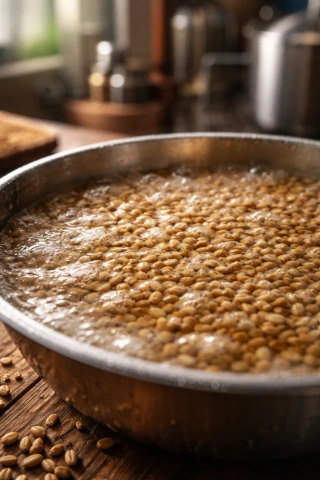
Raw barley is essentially dormant. The starches locked inside its kernels aren't accessible yet, so brewers first put the grain through a process called malting. It starts with steeping – soaking the grain in water for a day or two until it absorbs enough moisture to begin germinating. Tiny rootlets appear, and inside the kernel, natural enzymes start breaking down the grain's structure.
That germination is then stopped deliberately by kilning – blasting the grain with hot air in a large drum. The temperature and duration of kilning shape everything about the final malt. A light kilning produces pale malt with a biscuity flavor. Roasting at higher temperatures for longer creates chocolate or black malt, which gives stouts their deep color and bitter edge. Most of what you taste in a beer starts right here.
Mashing: Turning Starch Into Sugar
Once malted, the grain is milled – cracked open in a roller mill to expose the starchy interior. Those crushed grains then go into a vessel called a mash tun, where they're mixed with hot water, usually somewhere between 148°F and 158°F (64°C–70°C).
That temperature range isn't arbitrary. At lower temperatures, enzymes produce more fermentable sugars, meaning yeast will eat more of them and produce a drier, lighter beer. A higher mash temperature leaves more unfermentable sugars behind, giving the finished beer a fuller, richer body.
After 60 minutes or so, the liquid is drained off. That liquid is called wort – pronounced "wert" – and it's essentially sweet grain tea. Everything that happens next depends on it.
Boiling, Hops, and Cooling Build Flavor and Stability
Once the sweet liquid drains from the mash, it enters the kettle for one of the most transformative stages in brewing. This liquid, called wort, needs to be boiled for roughly 60 to 90 minutes. The heat sterilizes it, drives off unwanted compounds, and concentrates the sugars. Without this step, wild bacteria would take hold long before yeast ever got a chance.
Why Hop Timing Changes Everything
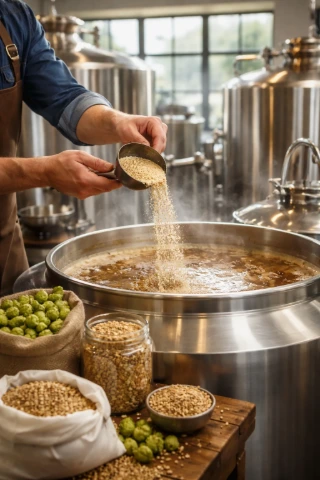
Hops go in during the boil, but when they go in matters enormously. Add them early, with 60 minutes left on the clock, and the heat breaks down their acids into compounds that taste bitter. The longer they boil, the more bitterness they contribute. That's why a West Coast IPA, built for a sharp, clean bite, tends to load up on early hop additions.
Late additions work differently. Toss hops in with just five or ten minutes remaining, and there isn't enough time to extract much bitterness. Instead, you preserve the aromatic oils that give hops their character. Citrus, pine, tropical fruit, fresh grass – those qualities survive only when the heat exposure is brief.
Some brewers go further and add hops after the boil entirely, a technique called dry hopping. The beer sits with whole or pelletized hops for days, absorbing fragrance without any heat at all. The result can be intensely aromatic in ways that no boil addition can replicate.
Whirlpooling and Cooling Protect the Beer
After the boil, the wort needs to move quickly through two more steps before fermentation can begin. First, brewers create a whirlpool by spinning the liquid in the kettle. This pushes hop debris and coagulated proteins into a cone at the center, leaving cleaner wort to drain off the sides.
Rapid cooling follows immediately. Wort passes through a heat exchanger that drops the temperature from near-boiling to around 18–20°C within minutes. Slow cooling invites contamination and stresses yeast. Get it right, and the yeast that goes in next has every chance to ferment cleanly.
Fermentation and Conditioning Shape the Finished Beer
Once the boil is done and the wort is cooled, the brewer's work steps back and yeast takes over. This is where beer actually becomes beer.
Fermentation: Yeast Does the Heavy Lifting
Yeast is added – or "pitched" – into the cooled wort, and it immediately gets to work consuming the sugars produced during mashing. As it eats, it produces two things: alcohol and carbon dioxide. But yeast also generates a surprising range of flavor compounds – esters, phenols, and other aromatic molecules that shape whether a beer tastes fruity, spicy, clean, or funky.
Ales ferment with yeast that works at warmer temperatures, typically between 15°C and 22°C, and finish relatively quickly – often within a week. Lagers use a different yeast strain that prefers colder conditions, around 7°C to 13°C, and ferments more slowly. That slower, colder process tends to produce a cleaner, crisper flavor profile with fewer fruity notes.
Conditioning: Where Rough Edges Smooth Out
After primary fermentation, the beer needs time to mature. Conditioning – sometimes called lagering for lagers, or simply cold crashing for ales – lets the yeast settle out, flavors integrate, and the beer clarify. Some off-flavors produced during fermentation, like acetaldehyde, which can give beer a green apple taste, naturally dissipate during this stage.
Carbonation also happens here, either naturally through residual yeast activity or by forcing CO2 in. Once ready, the beer moves into kegs, cans, or bottles.
Why Small Breweries Experiment More Freely
There's no denying that small breweries operate with a freedom large ones rarely enjoy. Brewing 500 liters of an experimental sour aged in whisky barrels is a manageable risk. Doing the same across a 50,000-liter production run is a financial gamble most large operations won't take.
Smaller batches mean less pressure for uniformity. A
Packaging and Quality Control Bring Beer to the Glass
Fermentation may be finished, but a beer still has several hurdles to clear before it reaches a tap, bottle, or can. Brewers need to protect it from oxygen, unwanted microbes, temperature changes, and excess sediment while making sure carbonation and flavor remain consistent. Packaging is therefore part of the brewing process rather than simply the point where the finished drink gets put into a container.
The exact approach varies between breweries and beer styles. Some beers are filtered until bright and clear, while others deliberately retain yeast and proteins for a hazier appearance and fuller texture. Whatever the style, careful handling during these final stages can make the difference between a fresh, balanced beer and one that loses its intended character before anyone drinks it.
- Clarification removes unwanted sediment. After conditioning, yeast cells, proteins, and hop particles may remain suspended in the beer. Brewers can allow these to settle naturally, use filtration, or rely on centrifuges to separate them. Not every beer needs to be crystal clear. Hazy IPAs and traditional wheat beers often keep some material in suspension because it contributes to their appearance, aroma, and mouthfeel.
- Carbonation has to be carefully controlled. Brewers can carbonate beer naturally by allowing a small amount of fermentation to continue in the bottle or keg, or they can introduce carbon dioxide under pressure. Different styles need different carbonation levels. A lively wheat beer may feel highly sparkling, while a stout is often smoother and less aggressively carbonated.
- Oxygen exposure is kept as low as possible. Oxygen is useful when yeast is first pitched, but it becomes an enemy once fermentation is complete. Too much oxygen during transfers or packaging can cause beer to taste stale, papery, or dull. Breweries therefore purge tanks, cans, bottles, and lines with carbon dioxide before filling them.
- Quality checks confirm the beer is ready. Brewers may measure alcohol content, final gravity, carbonation, acidity, color, and other characteristics before release. Tasting remains important too. Samples from different tanks or batches help identify unexpected flavors or inconsistencies before the beer reaches customers.
Packaging also affects how long those qualities survive. Cans block light completely, while dark bottles offer more protection than clear or green glass. Kegs are particularly useful for pubs because they keep beer in a sealed, pressurized environment until it is poured. From the mash tun to the final container, every stage contributes to what the drinker eventually experiences. Good brewing does not end when fermentation stops; it ends when the beer reaches the glass tasting the way the brewer intended.
Every Pint Tells the Story of Its Brewing
Each stage of brewing leaves a fingerprint on what ends up in your glass. The grain's starches become sugars during mashing, those sugars feed the yeast during fermentation, and the hops added at the boil shape everything from bitterness to aroma. Conditioning smooths the rough edges and lets the beer find its character. When you understand that chain – malting, mashing, boiling, fermentation, conditioning – you start tasting beer differently, noticing what the brewer chose and why. There's no denying that a small-batch pale ale from a local brewery and a mass-produced lager are telling very different stories, even before you read the label. Seek out a few styles you haven't tried, ask where the hops came from, or find a brewery that experiments with heritage grains. The brewing process rewards curiosity, and so does the beer.