Rule 1 – Read the Room Before You Read the Cocktail List
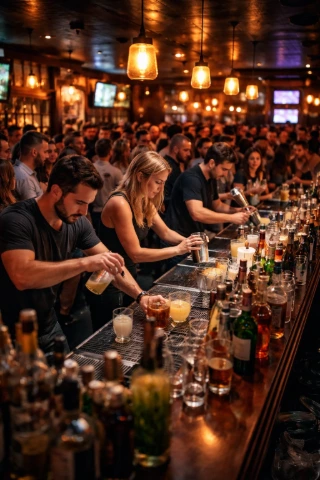
Packed bar, three bartenders moving fast, a line two deep at every station – this is not the moment to announce you need a minute. Good bar manners start before you ever open your mouth.
Watch the pace when you walk in. A slammed Friday night at a dive bar and a quiet Tuesday at a cocktail lounge are two completely different social contracts. One rewards decisiveness. The other has room for questions. Misjudging which one you're in is where most people go wrong.
Know your order before you flag anyone down. This sounds obvious, but it's the most commonly broken rule in any busy bar. If you're ordering for a group, ask everyone before you approach the counter. Arriving with a half-formed list and a "hold on, what did Sarah want?" wastes the one thing bartenders don't have – time.
Payment should be ready too. Card on the counter, cash in hand, whatever works. Watching someone dig through a bag for their wallet after a drink is poured is a small thing that adds up across a hundred customers a night.
Waving cash or snapping fingers to get attention is a fast track to being ignored. Bartenders see everything. Make eye contact, give a patient nod, and wait your turn. They know who's next. There's an unspoken queue that regulars respect instinctively, and jumping it – even accidentally – creates friction.
Rounds are your friend on a busy night. Ordering five drinks at once is far better than five separate trips to the bar. And if you're splitting a complicated tab during peak hours, maybe save the accounting exercise for when things quiet down. A simple "one tab for the group" moves things along for everyone.
Some nights the bar is the main event. Other nights it's just the backdrop. Either way, reading that energy early sets the whole night up right.
Rule 2 – Tip Like You Understand How Bars Actually Work
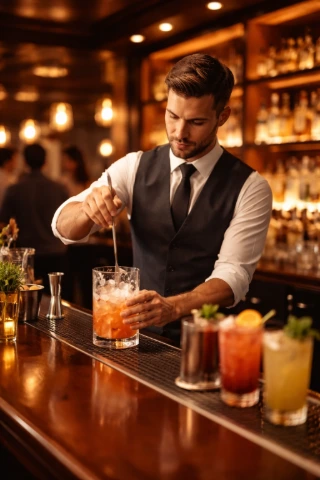
Most bartenders aren't making a salary that covers rent. Tips are wages. That's the starting point, and everything else follows from there.
The baseline in most American bars is a dollar a drink for simple orders – a beer, a shot, a glass of wine. Cocktails that take real effort deserve more, usually 20% of the tab or close to it. If you're running a tab all night, tip at the end based on the total. Don't drop a dollar every third round and think that covers it.
Ordering complicated? Expect to pay for that. A round of eight different cocktails on a Saturday night, each with specific modifications, is a lot to ask of someone managing thirty other people. Tipping well on that order isn't generosity – it's just accurate.
Water gets tipped too. If a bartender keeps your glass full, checks in on you, and treats you like a paying customer even when you're not drinking alcohol, a couple of dollars at the end of the night is the right move. They gave you their time and attention. That counts.
Consistency is what actually builds a relationship with bar staff. Tipping $50 once and then leaving nothing for three visits is confusing and doesn't earn you goodwill. Bartenders notice the person who reliably tips 20% on every visit far more than the person who occasionally goes big. The reliable tipper gets remembered, gets better service, and sometimes gets a pour that's slightly more generous than the menu suggests.
Late-night tipping matters more than most people realize. The last hour before close is exhausting work. Tipping well then signals that you're aware of that – and bartenders don't forget who treated them like a human being at 1:45 a.m.
Under-tipping after a lot of attention gets noticed fast. Don't be that person.
Rule 3 – Treat Tables, Stools, and Staff Time Like Shared Property
Claiming a table for six when there are two of you is the bar equivalent of taking up two parking spots. You know it's wrong. Everyone around you knows it's wrong. The seat beside you with a coat draped over it isn't "saved" – it's just a coat on a chair until someone actually shows up.
If your group is growing over the course of the night, that's fine. But if you've been nursing one drink for ninety minutes at a four-top near the window on a packed Friday, you're not a guest anymore. You're an obstacle.
Check whether a spot is reserved before you settle in. Some tables are held for food service or ticketed events, and sitting there anyway only creates an awkward conversation nobody wants to have. Just ask. It takes five seconds.
The same logic applies to staff time. When a bartender is three deep in orders and you snap your fingers or shout "hey," you've just made their job harder and your wait longer. Make eye contact, be patient, and have your order ready when they reach you. Launching into a story about your week while four people behind you are waiting isn't charming – it's oblivious.
Last call is not a negotiation. When the bar signals it's closing time, the answer to "just one more" is no. Bartenders aren't being difficult; they have legal obligations and a lot of cleanup ahead. Closing out cleanly when asked – without sighing, stalling, or pretending you didn't hear – is the kind of thing staff remember in the best way.
There's no denying that bars feel like social living rooms, and that's part of their appeal. But the space belongs to everyone using it that night. The guests who get that tend to have a better time anyway, because the staff actually want to look after them.
Rule 4 – Be Fun on Theme Nights Without Becoming the Problem
Theme nights usually work because everyone agrees, at least loosely, to play along. The problems start when enthusiasm turns into attention-seeking, rule-bending, or behavior that makes the night less enjoyable for everyone else. Whether it is karaoke, trivia, or another organized event, the best approach is to join in fully while still respecting the host, the staff, and the rest of the room.

Karaoke Night: Sign Up, Sing, Step Back
Theme nights bring out the best and worst in bar crowds. Karaoke especially has a way of turning reasonable adults into territorial performers the moment they get a taste of the spotlight.
The basic rule is simple: sign up once, do your song, and get back in the rotation. If the list is long and you've already had your turn, you don't get to jump back on before half the room has gone. The host is juggling a crowd, not running your personal concert.
Cheering for other singers costs you nothing and earns you everything. Even if someone is genuinely struggling through a Celine Dion power ballad, clap anyway. The whole point of karaoke is collective embarrassment dressed up as fun. People who sit stone-faced while others perform are the real problem.
Hijacking the mic mid-song, grabbing it from a friend "as a joke," or demanding an encore because the crowd seemed into it – all bad. One song, one moment, move on.
Trivia Night: Compete Hard, Lose Gracefully
Phones down if the venue runs an honor system. Seriously. Googling answers at a pub quiz is the equivalent of bringing a cheat sheet to a friendly poker game. You might win, but nobody wants to play with you again.
Keep your answers to your table. Shouting out the answer before another team writes it down is not clever, it's just rude. The host has heard every disputed answer in the book, too. Arguing every single ruling turns you into the person the whole room is quietly hoping loses.
There's no denying that winning feels good. But winning while being aggressive, loud, or dismissive of other teams means the staff are already hoping you don't come back. Regulars who bring genuine energy to theme nights – cheering, playing fair, laughing at themselves – are the ones bartenders are genuinely glad to see walk in.
Rule 5 – Know When to Slow Down and Call It a Night
Good bar etiquette is not only about ordering efficiently or tipping well. It also means knowing your own limits and recognizing when your night is starting to affect the people around you. Nobody expects every customer to remain perfectly composed after several drinks, but there is a difference between being louder than usual and becoming the person staff have to manage. Paying attention to that difference makes the night safer and far more enjoyable for everyone.
A few simple habits make this much easier:
- Drink water between rounds. You do not need to turn hydration into a project. Ordering a glass of water occasionally slows the pace and gives you something to drink while everyone else decides whether another round is actually necessary.
- Eat something if food is available. Showing up on an empty stomach and immediately ordering strong drinks rarely leads anywhere useful. Even a basic bar snack can help you pace the evening more sensibly.
- Do not pressure friends into another drink. If someone says they're done, switching to water, or heading home, accept it. "Come on, just one more" stops being friendly very quickly when the answer has already been no.
- Listen when staff cut someone off. Bartenders are trained to notice signs that customers have had enough. Arguing about it, ordering drinks for the person anyway, or trying another bartender is a reliable way to turn a simple decision into a problem.
- Plan the trip home before you need it. Know whether you're walking, taking public transport, calling a ride, or leaving with a designated driver. Sorting that out while you're still clear-headed is much easier than improvising at closing time.
There is no prize for being the last person drinking. Some of the best nights end because everyone recognizes the moment when staying another hour would only make things worse. Close your tab before the lights come up, collect your belongings, check that your friends have a safe way home, and leave without making the staff chase you toward the door. If somebody in your group is clearly struggling, help them rather than treating it as entertainment. Getting a friend into a taxi, waiting with them for their ride, or making sure they are not wandering off alone matters more than squeezing in another drink. Knowing when the night is finished is one of the least glamorous parts of bar etiquette, but it is also one of the most important.
The Best Regulars Make the Whole Bar Better
Small habits add up faster than you'd think. Knowing your order before you reach the bar, tipping a dollar or two per drink without being asked, not camping a four-top when it's just you and a friend – none of it requires charm or a big personality. The bartenders who genuinely light up when a regular walks in aren't reacting to how much that person spends. They're reacting to how easy that person makes the job. Someone who shares space without being told, keeps karaoke fun instead of turning it into a personal showcase, and shows up to trivia night to play rather than argue with the host – that's the person staff remember in the best way. Being a favorite regular is mostly a collection of repeatable, low-effort calls made over dozens of visits. You don't need a signature drink or a reserved stool. You just need to show up with a little self-awareness and treat the room like it belongs to everyone.